Commercial Moves in Kentish Town
If you are planning a business relocation and need Commercial Moves in Kentish Town, you want a service that feels organised from the first conversation through to the final box being placed in the right room. Moving a business is never just about transporting items from one building to another. It affects trading hours, staff routines, customer access, equipment safety, data security, and the ability to get back to normal quickly. That is why local knowledge matters so much in Kentish Town, where a mix of busy high streets, converted offices, studio spaces, retail units, cafés, professional practices, and light industrial premises can make every move slightly different.
Whether you are relocating a small office near Kentish Town Road, moving a shop unit close to the station, shifting a creative studio from one part of Camden to another, or transferring a larger commercial space with multiple departments, the right removals team can make a major difference. A well-planned commercial relocation helps reduce downtime, protect stock and equipment, and keep your team informed throughout the process. For local businesses, that reliability is often just as important as the actual moving day itself.
In a neighbourhood like Kentish Town, access can be tight, loading space may be limited, and time windows may need to be carefully managed. That is where a local commercial removals service becomes especially useful. From office moves and shop relocations to warehouse transfers and same-day internal reshuffles, the aim is the same: a smooth, practical move that respects your property, your schedule, and your business commitments.
Commercial moving support designed around Kentish Town businesses

Every business move has its own pressures. A medical practice needs privacy and careful handling of records. A design agency may need specialist attention for screens, desks, and creative equipment. A café or restaurant moving in Kentish Town might need refrigeration units, shelving, stock, and front-of-house furniture relocated with minimal disruption. A legal office or accountancy practice will often have filing systems, confidential paperwork, and IT hardware that must be managed in a structured way. Commercial Moves in Kentish Town should therefore be flexible enough to support very different types of premises and business models.
Local customers often need more than a van and a few strong arms. They need coordination, planning, packing support, dismantling and reassembly, careful handling of fragile items, and a team that can work around access restrictions. In many parts of Kentish Town, buildings range from older terraces and period conversions to modern mixed-use blocks and purpose-built commercial spaces. Each type brings different access challenges, and a local team is better placed to prepare for them.
Our commercial removals approach is built to help reduce disruption. That includes practical planning around business hours, route selection, building access, parking considerations, and the order in which items should be moved. When a relocation is handled properly, staff can return to work faster, stock can be accounted for more easily, and clients or customers experience less interruption.
What types of commercial moves are commonly needed?
Kentish Town businesses come in many forms, and so do their relocation needs. Some of the most common commercial moving requests include:
- Office removals for small businesses, startups, and growing teams
- Retail moves for shops, showrooms, and high-street units
- Hospitality relocations for cafés, bars, and restaurants
- Studio and creative workspace moves
- Professional practice relocations for solicitors, accountants, and consultants
- Internal office moves, floor-to-floor transfers, and room reconfigurations
- Archive, file, and document transport
- IT and equipment relocations requiring extra care
For many local businesses, the best outcome is not simply moving quickly. It is moving in a controlled, well-sequenced way that avoids damage, missed items, and unnecessary delays. That is why planning, communication, and local familiarity are key parts of a reliable commercial move.
Why Kentish Town businesses benefit from a local moving team

Kentish Town has a character all its own, and that character affects how businesses move. The area is well connected, but traffic patterns can be busy, and parking or loading access may be limited at certain times of day. Depending on your location, you may be dealing with narrow streets, controlled parking zones, shared entrances, stair access, or busy pedestrian routes. A local removals team that understands these conditions can plan more effectively and avoid common setbacks.
For local customers searching for commercial removals in Kentish Town, practical knowledge often makes the difference between a stressful move and an efficient one. A team used to working across Camden, Gospel Oak, Tufnell Park, Chalk Farm, Hampstead Heath, Belsize Park, Dartmouth Park, and nearby parts of North London is more likely to anticipate building restrictions, access time slots, and the best way to stage vehicles and equipment.
There is also a convenience factor. Businesses often need flexible timings, early starts, evening moves, or weekend relocation options to reduce downtime. A local service can often respond more efficiently to on-site inspections, planning questions, and last-minute schedule adjustments. This is especially valuable for customers who need a commercial move carried out in phases rather than all at once.
Typical local advantages
Choosing a Kentish Town-based or Kentish Town-familiar service can bring several practical benefits:
- Better understanding of local roads, access routes, and parking constraints
- Quicker site visits and clearer pre-move planning
- More suitable timing around local business hours and building rules
- Improved handling for office equipment, stock, and specialist items
- Convenient support for nearby areas across Camden and North London
For businesses that cannot afford unnecessary downtime, local experience is more than a convenience; it is part of risk reduction.
What is usually included in a commercial move?

A proper commercial move is usually more structured than a standard house move. Depending on your requirements, a service can include a wide range of practical tasks that help make the transition easier. The exact package depends on the size of the premises, the amount of furniture or equipment involved, and how much support you need before moving day.
Common inclusions for commercial moves in Kentish Town may involve packing assistance, furniture dismantling, transport, loading, unloading, item placement, and careful coordination with your building manager or office lead. In some cases, a move may also include specialist handling for IT equipment, archive boxes, display units, or commercial appliances. When a business has multiple departments or workspaces, a room-by-room plan is often the easiest way to keep everything organised.
Good commercial removals are not just about carrying items. They are about creating structure. That structure helps protect assets, reduce confusion, and make reinstallation simpler at the destination. A local team should be able to talk through what will happen at each stage so that managers, staff, and contractors know what to expect.
Common service elements
- Pre-move planning and scheduling
- Packing support for documents, stock, and office contents
- Dismantling and reassembly of desks, shelving, and workstations
- Safe transportation of computers, monitors, and peripherals
- Handling of fragile or high-value commercial items
- Loading and unloading with attention to access and timing
- Placement of furniture and equipment at the new premises
Optional support depending on your move
Some businesses also request crate delivery, moving supplies, archive relocation, internal churn support, or out-of-hours moving. These services can be particularly helpful when a business wants to maintain customer service or protect confidential information during the relocation period.
Types of premises we regularly help with

Kentish Town includes a wide range of commercial property types, and each one presents its own moving considerations. Older buildings may have stairs, tighter access, or heritage-style layouts. Newer commercial units may have lifts, shared service areas, and specific booking rules for loading bays. Mixed-use properties often require coordination with residents, landlords, or building managers. A business move should be tailored to the property, not treated as a one-size-fits-all job.
We commonly see moves involving high-street retail spaces, office suites, co-working rooms, basement workspaces, studios, clinics, restaurants, and specialist service premises. The needs of a small independent retailer can differ greatly from those of a growing agency or a company moving several staff teams at once. That is why the moving plan should reflect the building type, the item list, and the time available on the day.
Commercial Moves in Kentish Town should feel like a service built around your premises, not the other way around. If your property has narrow corridors, shared entrances, limited kerbside space, or strict access times, those issues can be factored in from the start.
Examples of common business premises
- Offices and administrative suites
- Retail shops and showrooms
- Cafés, restaurants, and hospitality venues
- Creative studios and media spaces
- Clinics, practices, and consultation rooms
- Shared office spaces and co-working units
- Storage rooms and small commercial warehouses
Many businesses in and around Kentish Town also need internal moves rather than full relocations. For example, a company may be redesigning a workspace, splitting one floor into multiple zones, or preparing an office for refurbishment. These jobs still need planning, but they can often be completed in a more flexible way that keeps the business running.
How a commercial move usually works
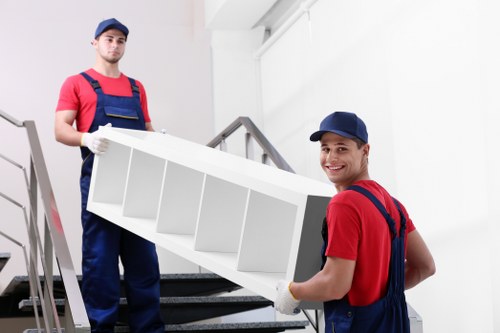
When customers enquire about a commercial move, they often want to know what the process looks like and how much involvement is needed from their side. A good moving service should make that clear from the start. The aim is to remove uncertainty and help you prepare with confidence.
Although every business move is different, a typical process often starts with an initial discussion about the size of the premises, the type of items being moved, the target date, and any access or parking concerns. After that, the move can be planned in stages. For larger jobs, this might include a pre-move assessment, packing schedule, equipment preparation, and confirmation of the loading and arrival arrangements.
Planning is the foundation of a smooth relocation. The more clearly the items, access points, and time constraints are understood in advance, the less likely you are to face delays or confusion on the day.
Typical stages of the move
- Discuss your business needs and move date
- Review access, parking, and building conditions
- Plan the packing or dismantling requirements
- Prepare equipment, furniture, and stock for transit
- Load items securely and transport them to the new site
- Unload and place items according to the new layout
- Support basic reassembly where required
For businesses with sensitive equipment or customer-facing operations, a phased move can be the best option. That may mean moving departments separately, handling IT early, or shifting front-of-house items outside trading hours.
What to expect on moving day
On the day itself, the most helpful thing you can do is keep communication open and make sure key decision-makers are available if needed. It also helps if your staff know which items are staying, which are being transported, and which should remain in place. The more organised the handover, the smoother the transition tends to be.
Preparation checklist for businesses moving in Kentish Town
Preparation can save time, reduce mistakes, and help your team stay calm on the day. It also makes it easier for the removals crew to work efficiently. If you are planning commercial moves in Kentish Town, the following checklist is a useful starting point.
- Confirm the moving date and access times with your building or landlord
- Check whether parking or loading arrangements need to be booked in advance
- Identify fragile, confidential, or high-value items that need special handling
- Back up digital files and organise IT shutdown procedures
- Label desks, boxes, and equipment by department or destination room
- Remove personal items, food, and loose clutter from work areas
- Tell staff what should be packed, what should stay, and what should travel separately
- Plan for utilities, keys, alarms, and building access at both sites
For shops and hospitality businesses, there may be additional tasks such as clearing stock shelves, disconnecting appliances safely, and protecting customer-facing displays. For offices, the focus is often on file management, IT equipment, desk setups, and confidential materials. For studios and workshops, tools, materials, and specialist gear may need their own packing or labelling system.
Simple preparation often leads to a smoother move. It is worth spending time on organisation before the moving date so that the actual relocation can proceed with fewer interruptions.
Useful questions to ask before booking
- Can the move be arranged outside business hours?
- What support is available for dismantling and reassembly?
- How should IT equipment and confidential files be prepared?
- Are there any access limitations at the current or new premises?
- Can the move be completed in stages if needed?
Pricing factors for commercial moves
Every commercial relocation is different, which means the cost usually depends on several practical factors rather than a fixed formula. Customers often want an estimate early, and that is entirely sensible. A reliable quote should be based on the details of your move, not vague assumptions.
Pricing for business removals in Kentish Town can be influenced by the size of the premises, the volume of furniture and equipment, the number of staff or teams involved, the amount of packing support needed, the distance between locations, and the time required to complete the work. Access conditions can also affect the plan. For example, stair-only access, limited parking, or a need for extra carrying distance may require more time and coordination.
It is also worth considering how the move will affect business downtime. Sometimes the cheapest option is not the most practical if it causes a longer interruption to trading. Many local customers prefer to focus on value, efficiency, and reduced disruption rather than choosing a service on price alone.
Factors that may affect your quote
- Size and complexity of the move
- Number of floors or access points
- Need for packing materials or packing labour
- Furniture dismantling and reassembly requirements
- Special handling for IT, files, stock, or delicate items
- Timing, such as weekends or out-of-hours work
- Distance between the old and new premises
A clear quote is easier to provide when the business has an accurate inventory and an honest picture of the site conditions. If you are unsure how to describe your move, a brief site discussion can often help clarify the scope.
Why local companies are often the best fit for business relocations
When a business moves, it is not only the items that are being transported. You are also trusting the movers with your schedule, assets, workspace, and in many cases confidential materials. That is why many Kentish Town customers prefer a local company with a practical understanding of the area and a strong focus on commercial work.
Local removals teams are often easier to coordinate with, especially when the move needs to happen quickly or around specific building rules. They can often help with short-notice changes, early starts, or multi-stage relocations. They may also be more familiar with the kinds of properties that dominate the area, including converted buildings, shared commercial spaces, and mixed residential-commercial blocks where access can be more complicated.
For businesses in Kentish Town, a local mover brings both convenience and local awareness. That can help reduce unnecessary delays and make planning much more straightforward.
Reasons customers choose a local service
- More responsive planning and communication
- Useful local knowledge for parking and access
- Better understanding of nearby business districts and property types
- Flexible service for small and medium-sized commercial moves
- Practical support for both residential and commercial customers who are relocating nearby
If your move involves nearby areas such as Tufnell Park, Gospel Oak, Camden Town, Belsize Park, Chalk Farm, Highgate, or Hampstead Heath, a local team can often organise the route and timing more efficiently. That is especially helpful when moving between busy streets, multiple sites, or premises with tight access windows.
Areas covered around Kentish Town
Commercial moving needs in Kentish Town often extend across surrounding parts of North London. Businesses commonly relocate between nearby neighbourhoods, or they move to premises with better access, more space, or a different customer base. A local service should be able to support moves across the wider area without making the process more complicated than it needs to be.
Areas often covered include Kentish Town itself, as well as nearby locations such as Camden, Chalk Farm, Gospel Oak, Tufnell Park, Belsize Park, Dartmouth Park, Highgate, Hampstead, Archway, and parts of Primrose Hill. This is especially useful for businesses that are moving within a short radius and want a team that understands the local route options and property layouts.
If your business is relocating within North London, a local commercial removals service can help keep the move efficient and manageable.
Examples of nearby move types
- Office-to-office moves within Camden borough
- Shop relocations from one high street unit to another
- Studio transfers between shared workspaces
- Hospitality venue moves to larger or more accessible premises
- Internal moves during refurbishments or fit-outs
Frequently asked questions
How far in advance should I book a commercial move?
It is best to book as early as possible, especially if you need a weekend slot, out-of-hours work, or support for a larger office or retail relocation. That said, short-notice commercial moves are sometimes possible depending on availability and scope.
Can a commercial move be done outside normal trading hours?
Yes, many businesses prefer evenings, early mornings, or weekends to reduce disruption. This can be particularly useful for customer-facing premises, busy offices, or businesses with strict operational schedules.
What if my building has limited parking or difficult access?
That is common in Kentish Town and nearby areas. A local team can plan around access issues, loading restrictions, and carrying distances. It is important to mention these details early so the move can be organised properly.
Can you help move office furniture and IT equipment?
Commercial moves often involve desks, chairs, cabinets, monitors, computers, printers, and related equipment. The best approach is to identify fragile and sensitive items in advance so they can be packed and handled with appropriate care.
Do I need to pack everything myself?
Not necessarily. Some businesses prefer full packing support, while others only need assistance with specific items or departments. It depends on your schedule, your budget, and how much internal resource you have available.
What should I do with confidential documents?
Confidential files should be identified clearly and packed or transported in a way that suits your internal data handling procedures. Many companies choose to keep key records separate and label them for controlled delivery.
Can the move be split into stages?
Yes. A phased relocation can work very well for businesses that want to keep operating during the move. Departments, rooms, or item categories can be moved in a planned sequence rather than all at once.
Book a commercial move that works for your business
When you are preparing a business relocation, the best results usually come from clear planning, local knowledge, and a service that understands how important timing and organisation are to your operation. Commercial Moves in Kentish Town should give you confidence that your equipment, furniture, stock, and documents will be handled with care and moved in a way that supports your business goals.
Whether you are moving a small office, a retail unit, a hospitality space, or a specialist commercial premises, a local removals team can help make the process simpler and less disruptive. If you need practical support, sensible scheduling, and a move plan tailored to your premises, this is the right time to start the conversation.
Request a free quote, contact us today, or book your service now. If your business move is coming up soon, the earlier you plan it, the easier it is to manage the details and protect your day-to-day operations.
For reliable commercial removals in Kentish Town, choose a team that understands local access, busy streets, and the realities of moving a working business.